

A backpack is a practical choice for Tawaf and Umrah because it provides space for essential items such as a mobile phone, prayer mat, glasses, cap, Tasbeeh, and a small water bottle. In this Tawaf and Umrah Bag Guide, Amber shares her personal experience of using a backpack and a crossbody bag, explaining how backpacks offer hands-free carrying and weight distribution across both shoulders, while crossbody bags are convenient for carrying fewer essentials. The guide also covers practical packing tips, including keeping footwear separate from personal belongings, to help pilgrims choose a comfortable bag for their Umrah journey.
Preparing for Umrah involves more than booking your flights, packing your Ihram or Abaya, and planning your journey. You also need to think about the small essentials you will carry with you throughout the day.
Your mobile phone, prayer mat, glasses, cap, Tasbeeh, water bottle, and other personal belongings all need a convenient place. And when you are walking for long periods, performing Tawaf, or finding a suitable place to pray, the bag you choose can make a real difference to your comfort.
So, which bag is best for Tawaf and Umrah? Here I am sharing my personal experience with you.
My Experience Choosing the Best Bag for Tawaf and Umrah
Looking back, a medium-sized backpack was the most practical choice for carrying my everyday essentials during Umrah. Here’s why I preferred it, when I found a crossbody bag useful, and why I would also consider a tote bag for mothers travelling with children.
Why I Found a Backpack So Convenient During Umrah
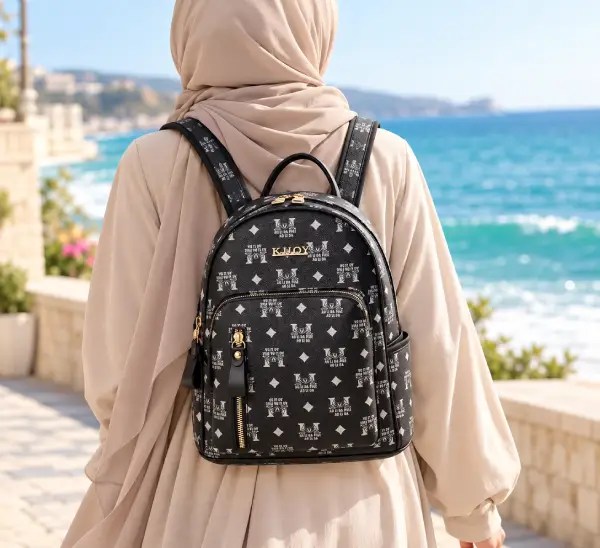
During my Umrah journey, I realised how useful it was to have everything organised in one place.
My backpack gave me enough room to carry my everyday essentials without needing a separate bag for each item. I could keep my mobile phone, prayer mat, glasses, cap, Tasbeeh, and a small water bottle together.
I particularly liked having a dedicated place for everything. Instead of searching through different pockets or carrying items in my hands, I could organise my belongings before leaving my accommodation.
The biggest difference I noticed was the comfort.
Because my backpack had two shoulder straps, I could carry its weight across both shoulders. This felt more comfortable than keeping all the weight on one shoulder, particularly when I had several items inside.
I also appreciated having both hands free. I didn’t have to keep holding my bag or adjusting it on one shoulder while walking. I could focus on where I was going and manage my other belongings more easily.
Another thing I liked was the storage space. A medium-sized backpack was large enough for my essentials but wasn’t as bulky as a large travel bag. I could carry what I needed without feeling that I was taking my entire luggage with me.
Of course, I still had to be careful about the weight. I learned that carrying unnecessary items could make any bag uncomfortable, even a backpack. Keeping it organised and packing only what I needed made a real difference.
What I Carried in My Backpack During Umrah
One thing I learned during my journey was that packing thoughtfully made the day easier.
I kept my mobile phone in an easily accessible pocket so I could reach it whenever I needed it. I also carried my glasses in a protective case to avoid scratches or accidental damage.
My foldable prayer mat was another important item. It fitted inside my backpack without taking up too much space. I also carried my cap and Tasbeeh, along with a small water bottle.
Having these things together meant I didn’t have to worry about where to put them or whether I had forgotten something before leaving my accommodation.
I found that a medium-sized backpack worked well because it offered enough room for these essentials without encouraging me to carry unnecessary belongings.
Find your Best Backpack
How I Managed My Shoes
One practical detail I had to consider was what to do with my shoes when I took them off.
I didn’t want to carry them in my hands while managing my other belongings. I also wanted to keep my shoes separate from my prayer mat and personal items.
A simple solution was to keep a clean polythene bag or a reusable shoe pouch inside my backpack. When I needed to remove my shoes, I could place them in the separate bag and keep them apart from my other belongings, where permitted.
This was a small but useful packing consideration. It helped me keep my bag organised and avoid getting dirt on my prayer mat, glasses, or other essentials.
I also followed the footwear-storage instructions where applicable and would recommend using designated storage facilities whenever required.
My Experience With a Crossbody Bag During Umrah

I had also used a crossbody bag during my outings, and I appreciated its convenience.
I liked how easily I could carry my phone, cash, identification, tissues, and other small essentials. Everything stayed close to me, and I could reach into the bag without taking it off completely.
For occasions when I didn’t need to carry many belongings, the crossbody bag worked well.
However, during Umrah, I realised that I sometimes needed more space than a small crossbody bag offered. Carrying my prayer mat, glasses, cap, Tasbeeh, and water bottle together could make the bag feel crowded.
I also noticed a difference in how the weight felt. Since a crossbody bag generally rested on one shoulder, its weight could become uncomfortable when I carried several items for an extended period.
Compared with my backpack, I had less room to organise my belongings. I had to think more carefully about what I carried and what I could leave behind.
That didn’t make the crossbody bag a bad choice. I still found it useful when I wanted to travel light and carry only a few essentials.
But when I needed to carry more things throughout the day, I preferred my backpack.
My personal experience taught me that a crossbody bag was convenient for lighter outings, while a medium-sized backpack was more practical when I needed additional space and comfort.
Explore our Crossbody Bags
What I Learned About Packing for Umrah
After completing my Umrah journey, I realised that choosing the right bag was only part of the preparation. The way I packed it also mattered.
I found it helpful to keep frequently used items in accessible pockets, protect my glasses in a case, and carry a lightweight prayer mat that didn’t take up too much space.
I also made sure my water bottle was secure and kept footwear separate from my personal belongings when necessary.
Most importantly, I learned not to overpack. Carrying fewer, more useful items made my bag easier to manage throughout the day.
I also understood the importance of keeping my bag compact in crowded areas and following local guidance about carrying belongings inside the mosque.
These small considerations helped me think more carefully about what I needed and how I wanted to carry it.
My Final Thoughts
From my Umrah experience, I found a backpack the most practical for carrying my everyday essentials. My crossbody bag was also useful when I needed to carry fewer items.
Choose a bag that suits your needs, keeps your belongings organised, and feels comfortable throughout the day.
May Allah accept your Umrah and bless you with a peaceful journey.